Maltase Enzyme Solutions · application
Maltase supports controlled maltose hydrolysis in mash, wort, and carbohydrate feedstocks to improve glucose availability for fermentation-driven production.
Request pricingOverview
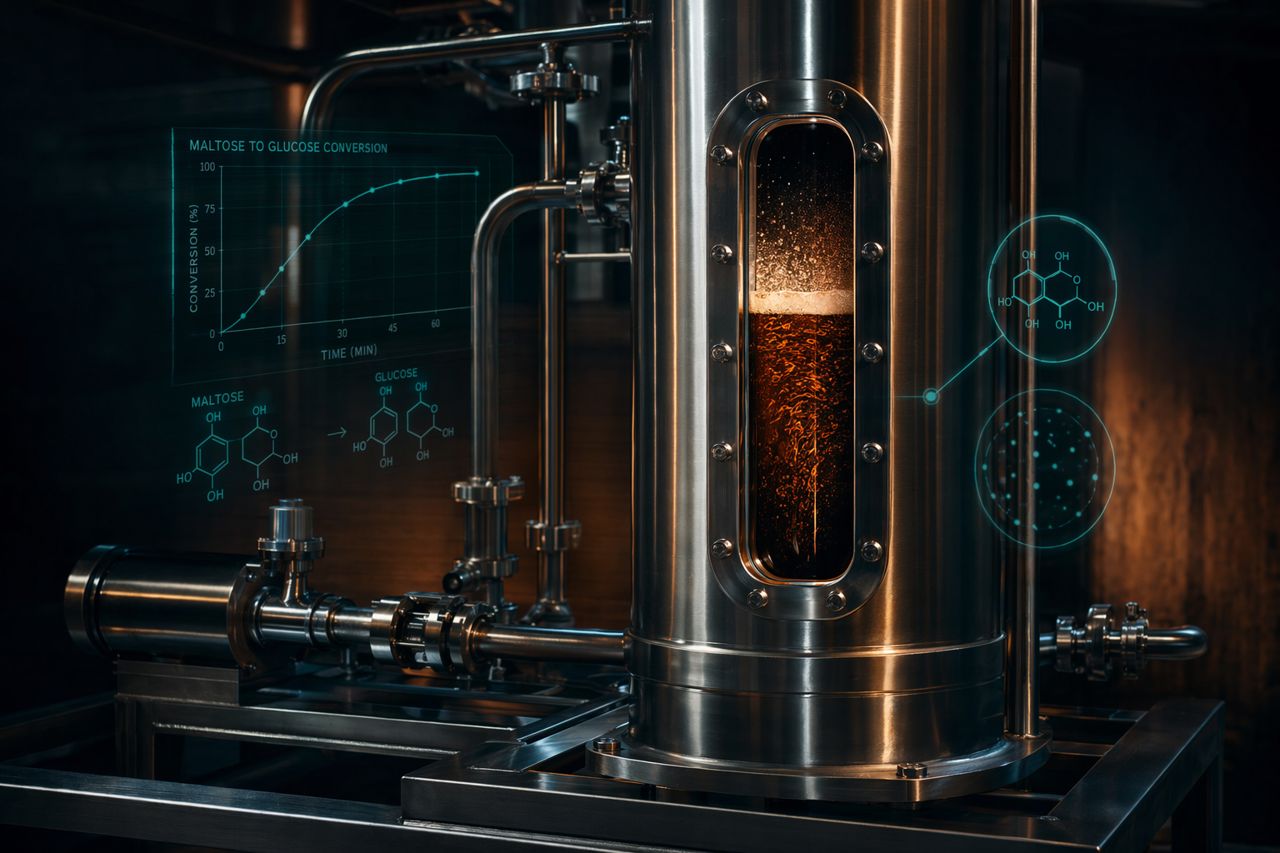
In distilling and bioethanol production, maltose is not always the preferred carbohydrate at the point fermentation begins. Maltase supports targeted hydrolysis of maltose into glucose, helping process teams improve fermentable sugar availability before or during fermentation.
This is a practical enzyme tool for mash systems, grain-derived streams, malt-based substrates, and carbohydrate feedstocks where residual maltose can limit yeast access, slow early fermentation, or complicate conversion control.
Wholesale and bulk maltase for manufacturers, ingredient blenders, distributors and resellers. Every order is quoted individually. Request a quote with your product or application, the quantity you need and the destination country.
Maltase, also known as alpha-glucosidase or maltose glucohydrolase, cleaves maltose into glucose. For industrial fermentation teams, the value is straightforward: make the carbohydrate profile more accessible to yeast and easier to manage.
Typical objectives include:
Maltase Enzyme Solutions is designed for controlled saccharification environments where enzyme timing, feedstock variability, and fermentation performance are all commercial variables.
In spirits production, maltase can support conversion strategies in malt-based or grain-based mashes where maltose remains after upstream starch breakdown. Process teams may use it to refine fermentable sugar composition before yeast pitching or during controlled conversion windows.

Relevant use cases include:
In fuel ethanol and industrial alcohol production, glucose availability can affect fermentation kinetics, yield consistency, and residual carbohydrate profile. Maltase is useful where process mapping shows maltose accumulation after liquefaction, saccharification, or mixed-enzyme treatment.
Relevant use cases include:
Maltase Enzyme Solutions is built for B2B buyers who need enzyme performance that can be evaluated, documented, and integrated into production decisions.

Maltase is most valuable when it is placed deliberately: before fermentation, during a defined conversion hold, or in a process step where maltose hydrolysis can be measured against glucose release and residual sugar decline.
Maltase Enzyme Solutions supports outcomes that matter to R&D, process engineering, procurement, and plant operations:
Every distillery or ethanol plant has its own feedstock, temperature profile, pH window, solids handling, and yeast strategy. Maltase Enzyme Solutions supports application-led evaluation so teams can assess compatibility under their own process conditions without relying on generic assumptions.
A common evaluation sequence is:
Maltase Enzyme Solutions can be evaluated as a focused maltose-conversion enzyme or as part of a broader saccharification strategy where starch breakdown generates maltose that still needs to be made yeast-accessible.
When requesting pricing or a technical discussion, include as much of the following as possible:
This helps the Maltase Enzyme Solutions team respond with the most relevant commercial option and evaluation guidance.
Use the form below to request a quote, discuss process fit, or start a maltase evaluation for distilling or bioethanol production.
Ready for a quote? Use the inquiry form at the foot of this page. Tell us the application, the quantity per order or per year, the format you prefer (liquid or powder) and the delivery country. Price, pack and lead time are quoted per order.
Process


Applications
Enquire
Tell us your application and volume — we reply with pricing and lead time.
We have received your message. We will reply by email.